Dubai, UAE, December 4, 2025: Cushman & Wakefield Core has released its Dubai Annual Retail Market Update 2025/2026, revealing that the emirate’s retail sector continues to strengthen amid record tourism inflows, rising population, and a development pipeline that reflects both scale and diversification.
As Dubai kicks off the 31st edition of Dubai Shopping Festival, retail performance continues to strengthen and the report’s latest insights reaffirm the city's positioning as one of the world’s leading retail destinations.
According to the report, Dubai Mall’s Fashion Avenue now ranks as the 11th most expensive retail location globally, with rents up 9% year-on-year, placing Dubai among the top five global cities for retail rental growth. Retail remains a cornerstone of the local economy, contributing 25.3% of Dubai’s GDP, the highest share of any sector, supported by robust consumer spending and steady inflows of global wealth.
Super-regional malls maintain dominance amid a range of new upcoming supply Dubai’s existing retail landscape remains anchored by its super-regional malls, which continue to achieve 95–99% occupancy and attract sustained tenant demand.
When looking at upcoming supply, Al Khail Avenue and Dubai Expo Mall are the prominent retail developments scheduled for 2026 and 2027. Looking ahead, extensions to Dubai Mall and Mall of the Emirates further reinforce commitment to the luxury, F&B, and experiential retail segments. The recently announced Dubai Square mall, a major new retail and lifestyle landmark with a total investment of AED 180 billion, is expected to lead the upcoming retail supply pipeline in the mid-term.
Super regional malls and prime districts see record performance as lifestyle retail expands Super regional malls continue to achieve the highest retail rents in the market, with rates between AED 400 and AED 2,000 per sqft, underpinned by near-full occupancy levels and long waitlists. Similarly, rents in destination-led retail and retail within mixed-use developments are also at an all-time high, with Downtown Dubai, Palm Jumeirah, DIFC, and Dubai Marina witnessing strong demand and record rents for both licensed and non-licensed units.
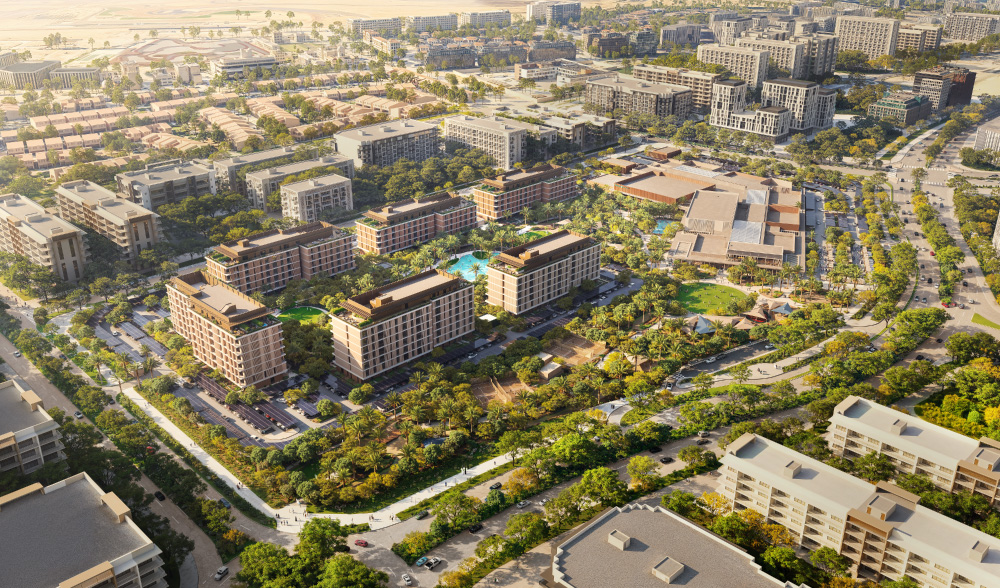
At the same time, destination-led and community-focused retail is growing rapidly, with smaller neighbourhood centres in Al Barsha, Motor City, and Nad Al Sheba achieving full occupancy within a year of completion. Developers are increasingly integrating 80,000–140,000 sqft of community retail into mixed-use masterplans, anchored by supermarkets, clinics, fitness centres, and homegrown F&B operators.
Market Insight from Cushman & Wakefield Core Prathyusha Gurrapu, Head of Research, said: “Dubai’s retail market continues to evolve in line with its growing population and the diversification of resident lifestyles. We are seeing strong performance in both super-regional malls and well-designed neighbourhood centres, driven by demand for convenience, experience, and quality. This balance is creating a resilient and increasingly sophisticated retail ecosystem across the city.”
Warren Krawchuk, Head of Retail, added: “Dubai is redefining retail by merging lifestyle, design, dining, and culture into immersive destinations that go beyond traditional shopping. Demand is evolving toward formats that blend experience, convenience, and long-term value for both occupiers and landlords.”
Outlook: Retail growth shifts from luxury-led to community-driven The report forecasts continued strength in prime retail rents in 2026, while secondary and suburban markets are expected to see healthy absorption supported by population growth and infrastructure expansion. The long-term trajectory points to a balanced ecosystem, where large-format malls, mixed-use destinations, and neighbourhood retail coexist to meet the needs of Dubai’s expanding, high-spending resident base and international visitors alike.
While brick and mortar remains the dominant format, both home grown and international brands are accelerating the shift towards phygital retail, using online presence for inventory depth and customer convenience, and physical stores to drive experiences. These brands are shaping mall strategies, raising consumer expectations, and reinforcing Dubai’s position as a leading global retail hub.